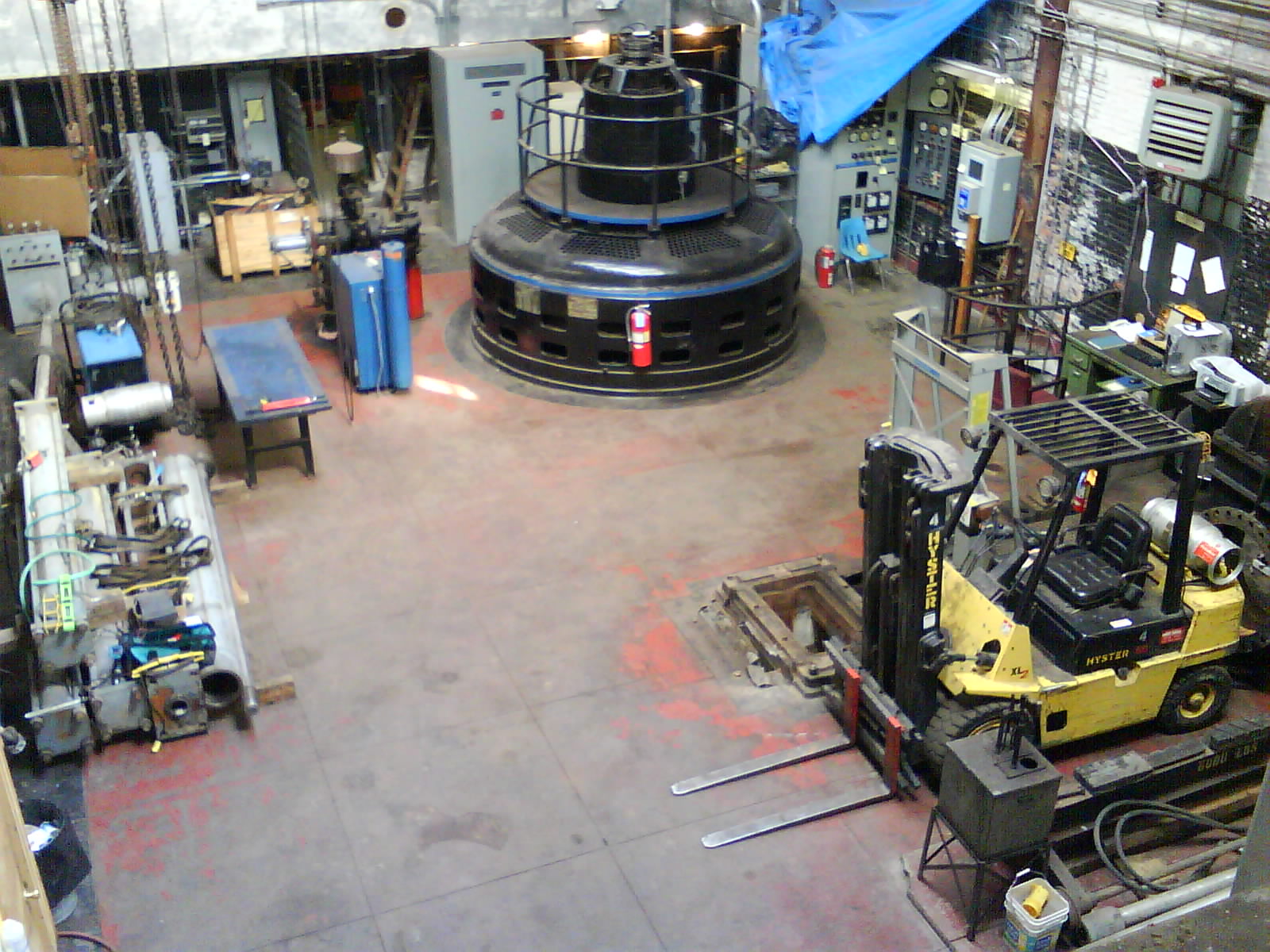
Turners Falls Generator Rewind Web Page
Hi every body!! Pease see the following Picasa Web Album for the picture of us removing, turning and re-installing a generator shaft!!!!
http://picasaweb.google.com/frenchriverland/PullingTurnersFallsRotorShaft?authkey=Gv1sRgCLOuruDjs-qa4QE# <<< Please click on this link
We burned a 2300 hundred volt coil on our Turners Falls unit two weeks ago. Upon inspection we realized the windings were very brittle from aging. We needed to rewind the entire stator. In order to keep costs down, our crew dismantled the unit to allow the rewinders to work.
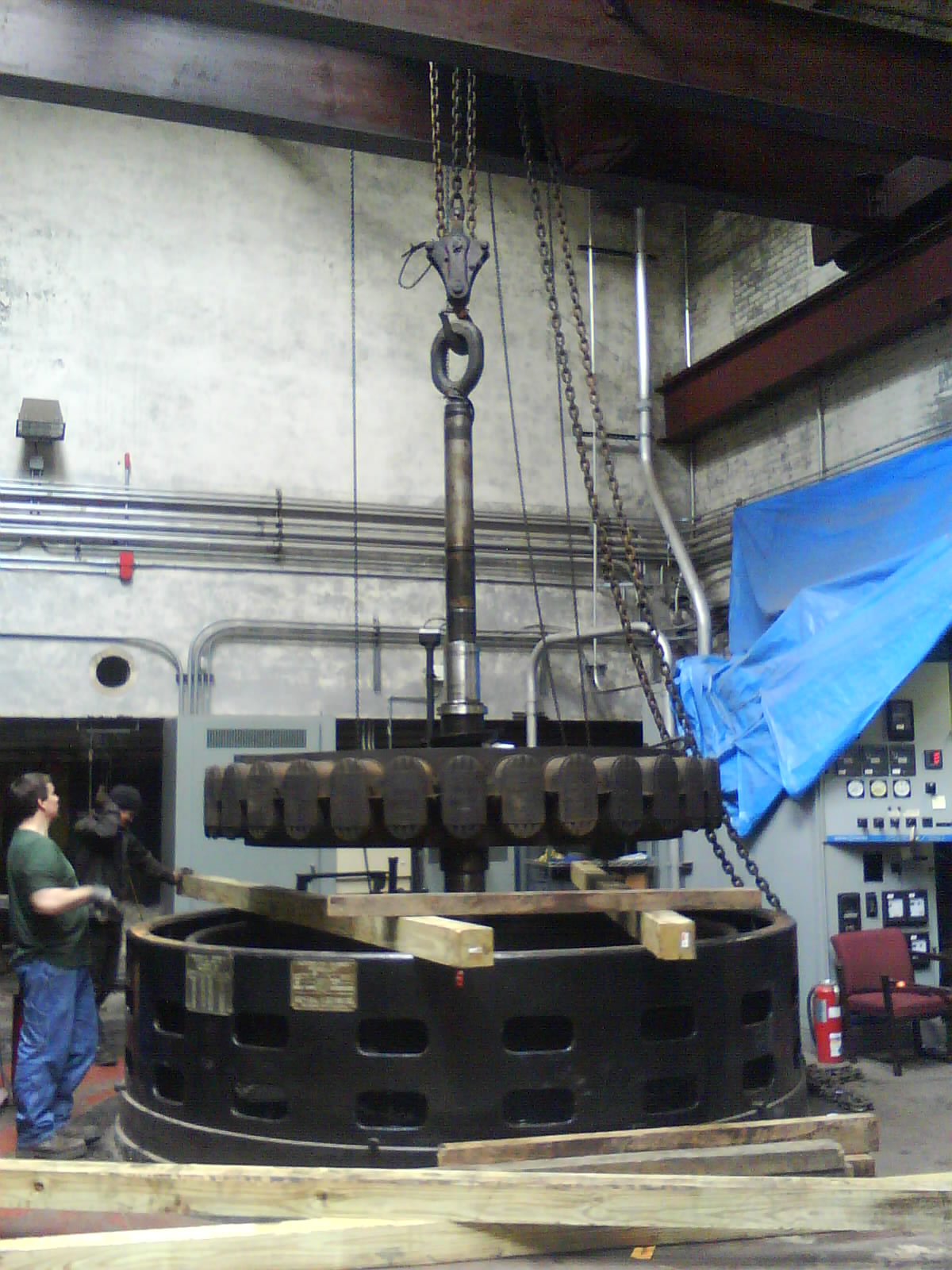
Note the very large eyebolt used to lift the rotor. It screws directly into the top of the rotor shaft. It was originally supplied by General Electric in 1918.
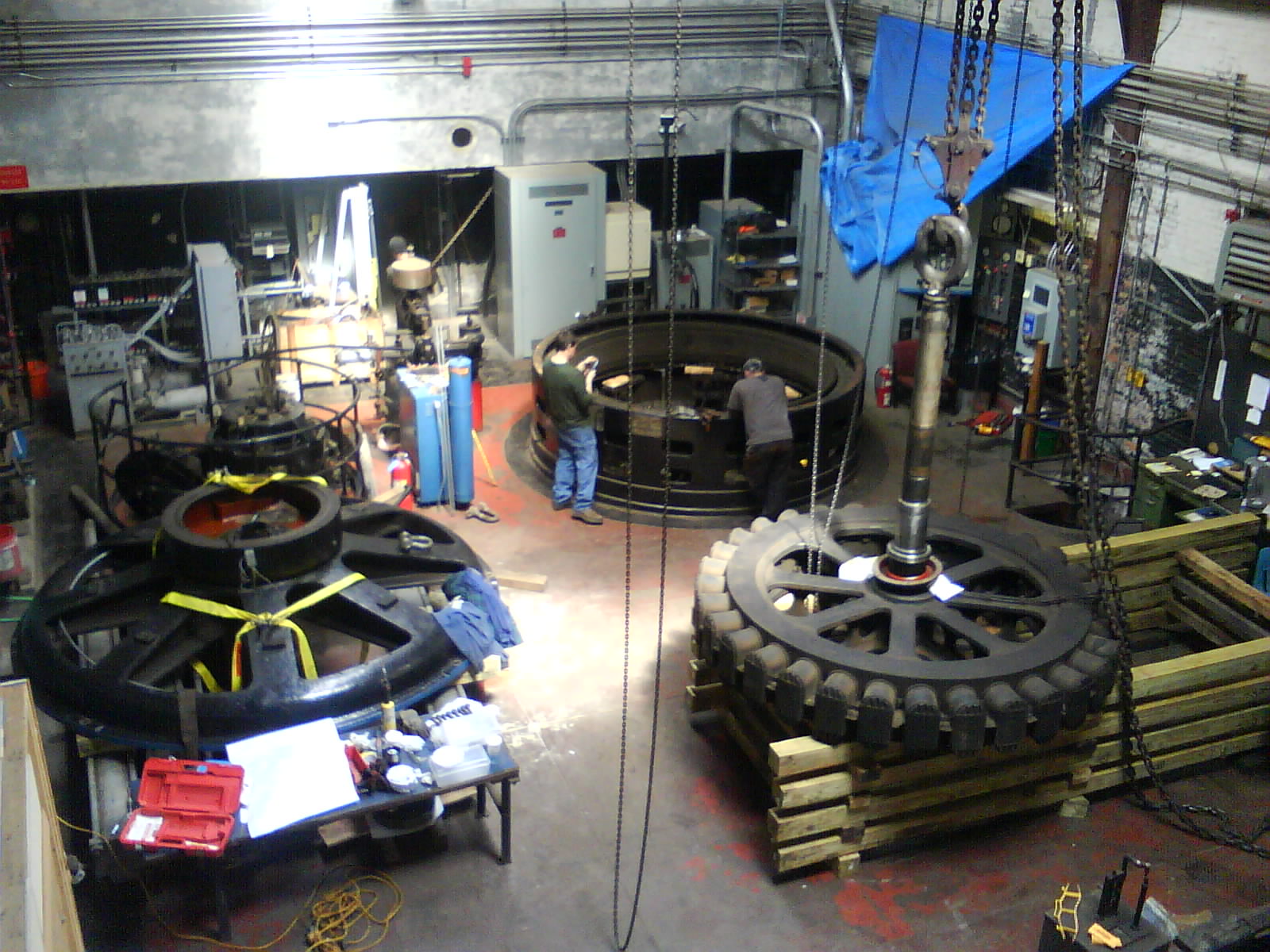
Our crew, under the supervision of Mike Desrouche, worked all last week pulling the unit. We have gotten back two quotations for the rewind work done in place. Not including our portion of the job, the costs are amazingly close to $145,000.
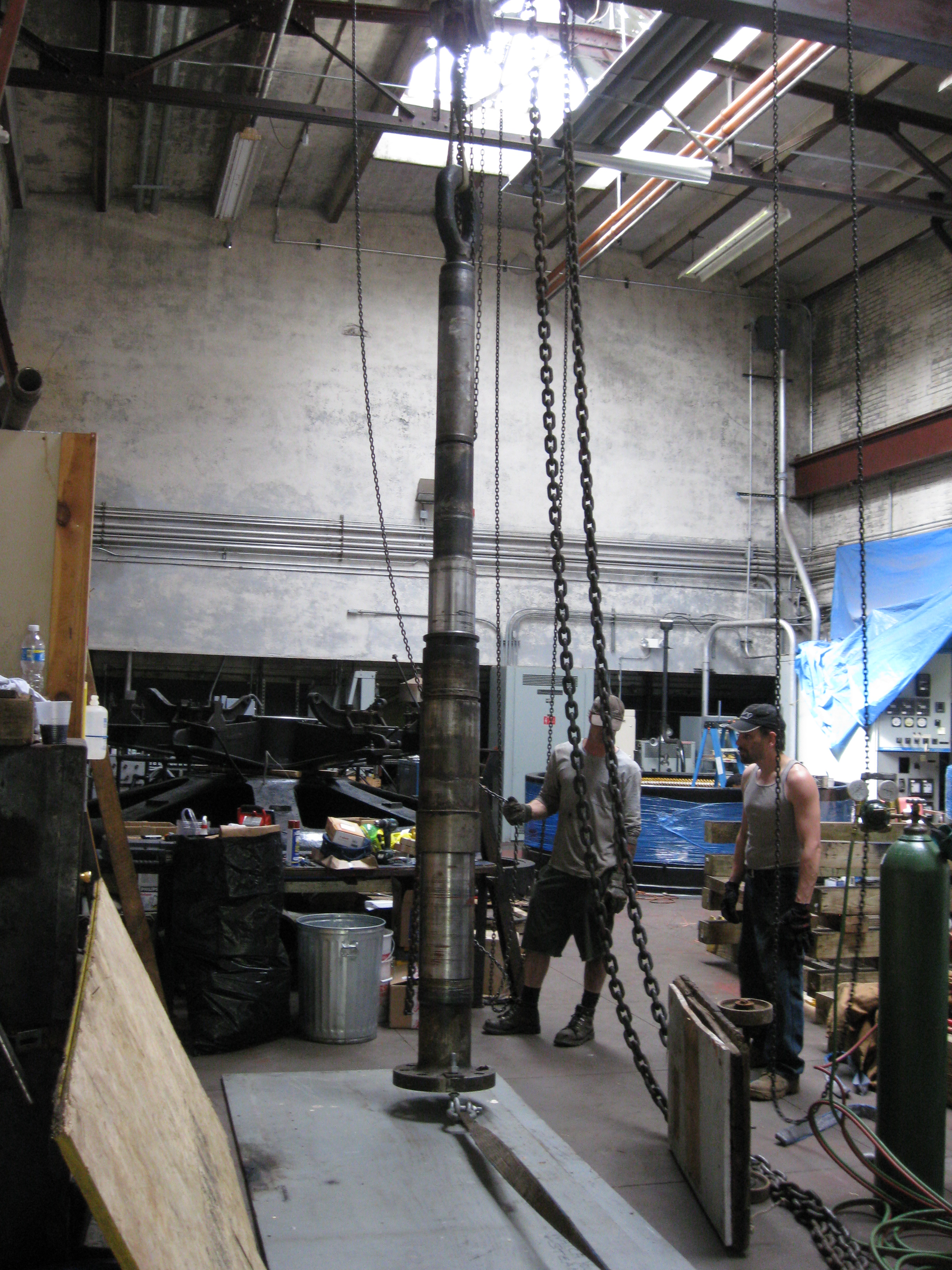
One generator rotor shaft pressed out! We are flipping it vertical to horizontal. We tied it to the fork lift truck. We are pulling it sideways while letting down on the bridge crane. We pulled sideways a little too hard and the bridge crane started to move. Eric grabbed the propel chain and stopped it!!
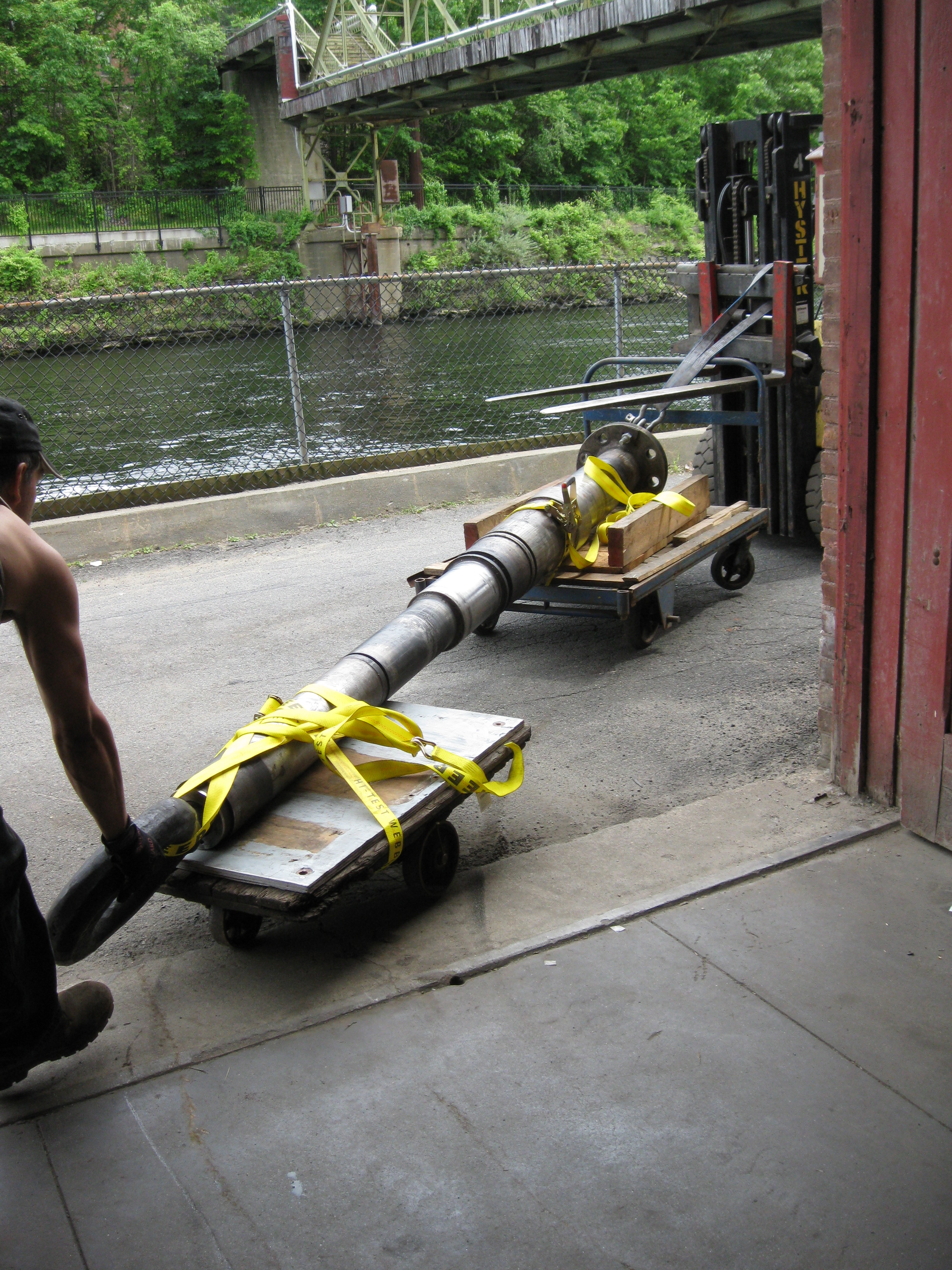
How do you get a 4,500 pound shaft, out of the powerhouse, onto the trailer? We used two mill carts to make a choo choo train!! Bill was the steam engine and Eric was the caboose!!
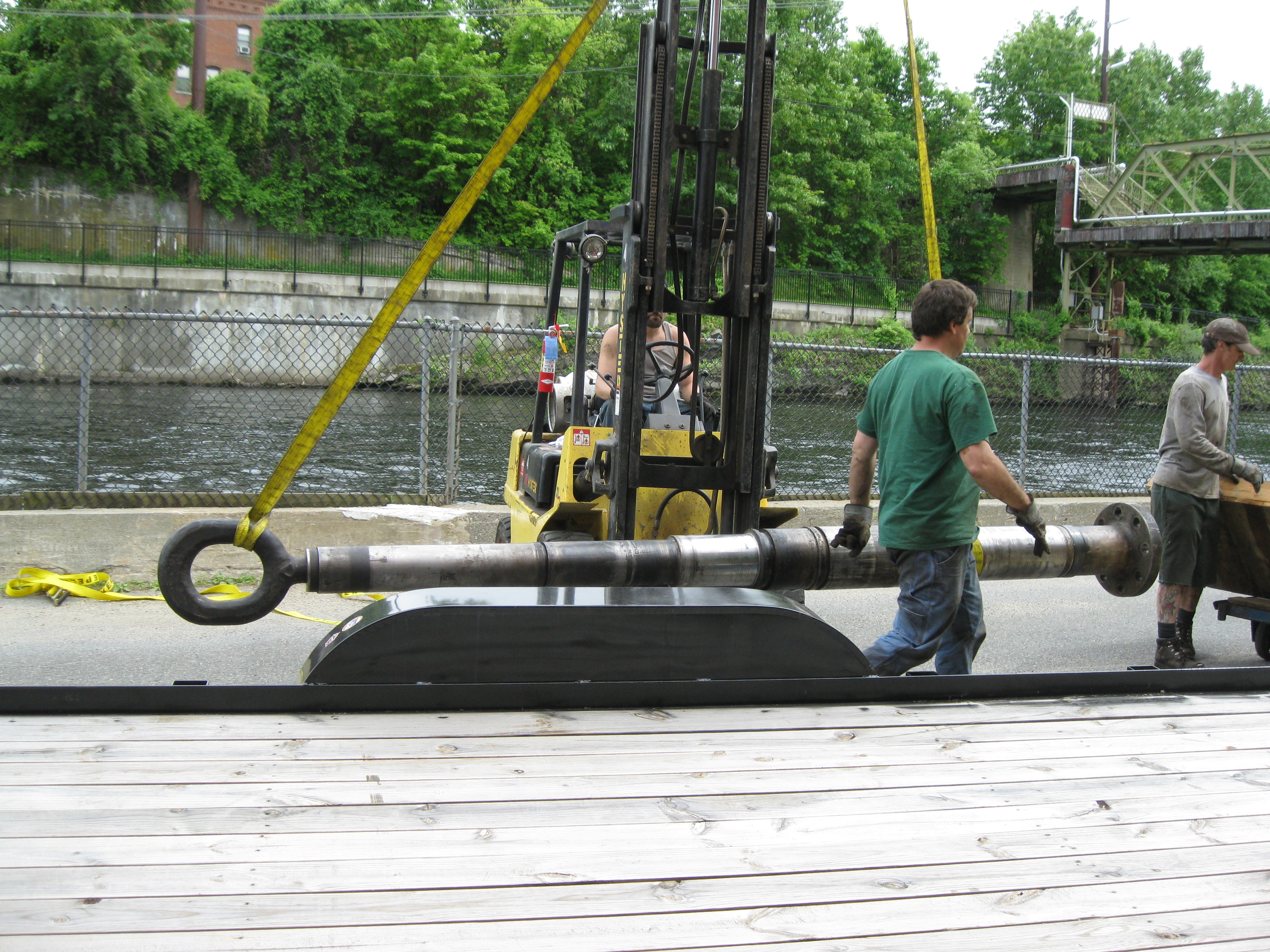
On to the trailer.
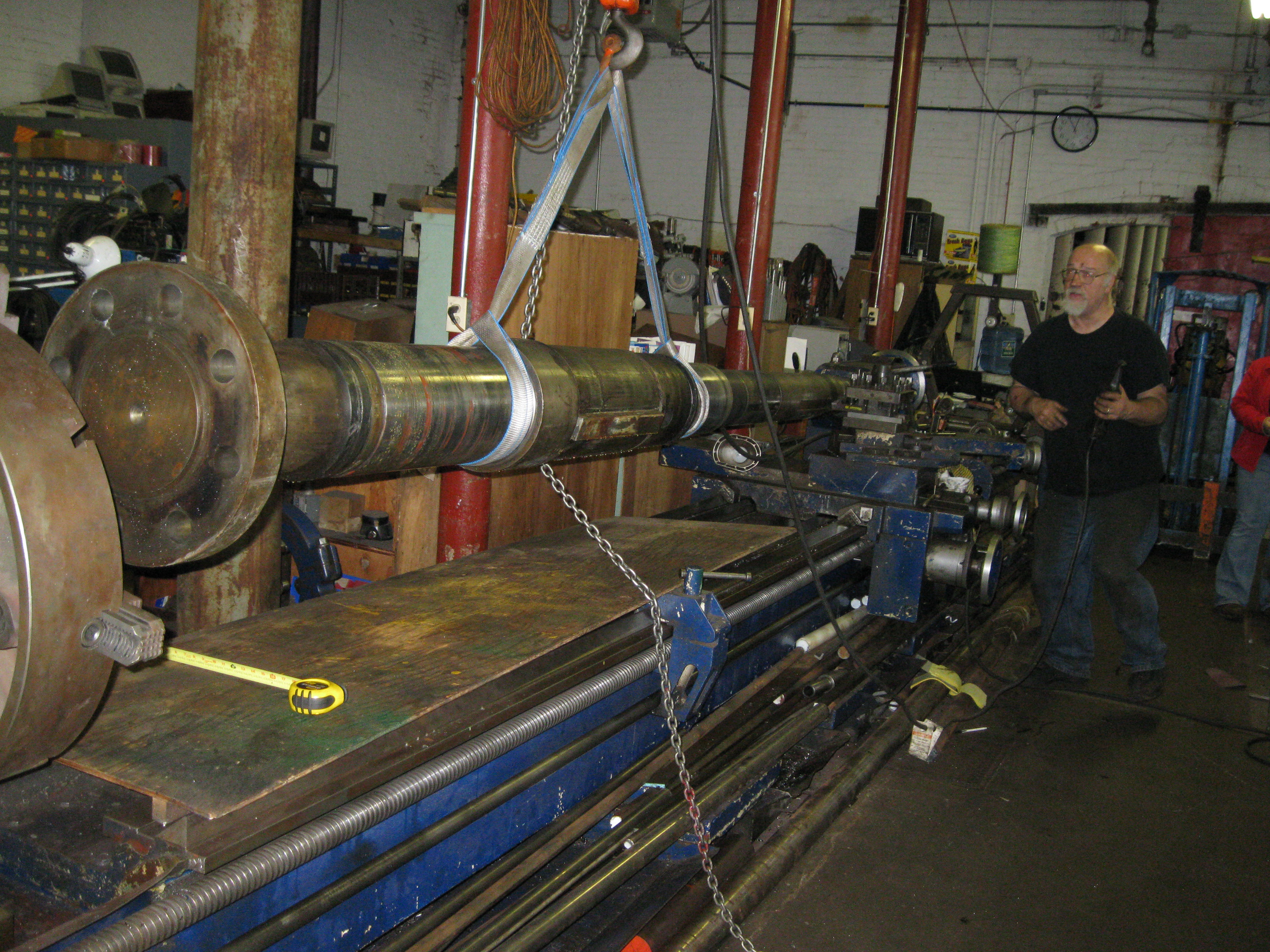
Into the lathe. Notice the rust streaks on the lower bearing journal surface. They illustrate where the lower bearing journal is located. You can see how bad the journal surface is and why we needed to turn them. We had left it outside, on the trailer over the holiday weekend. The tarp blew off and the shaft got rained on. I did not mind as we turned the surfaces new.
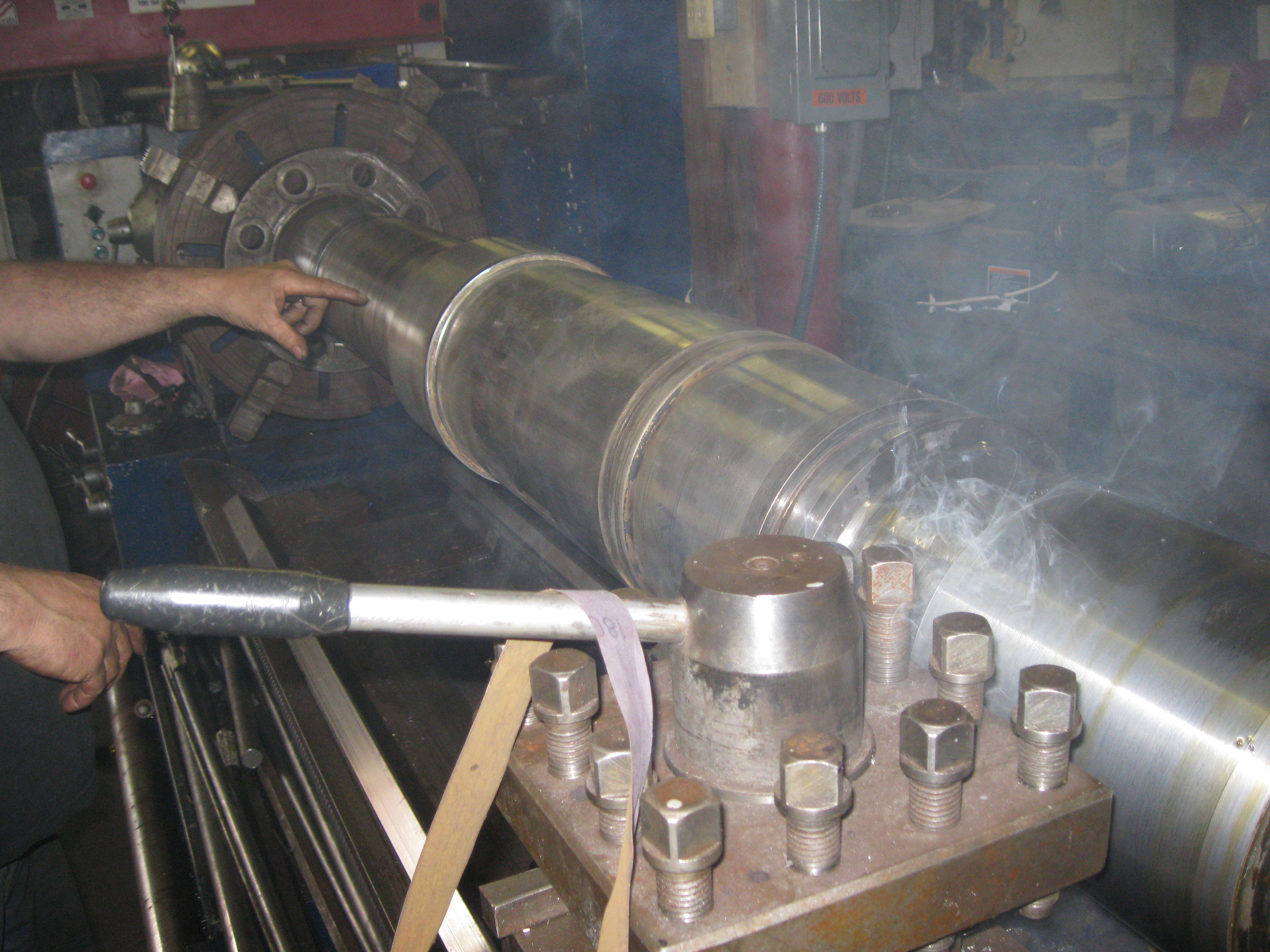
Here, Warren is turning the surface of the upper bearing journal. The smoke is the cutting oil vaporizing as it cools the cut.
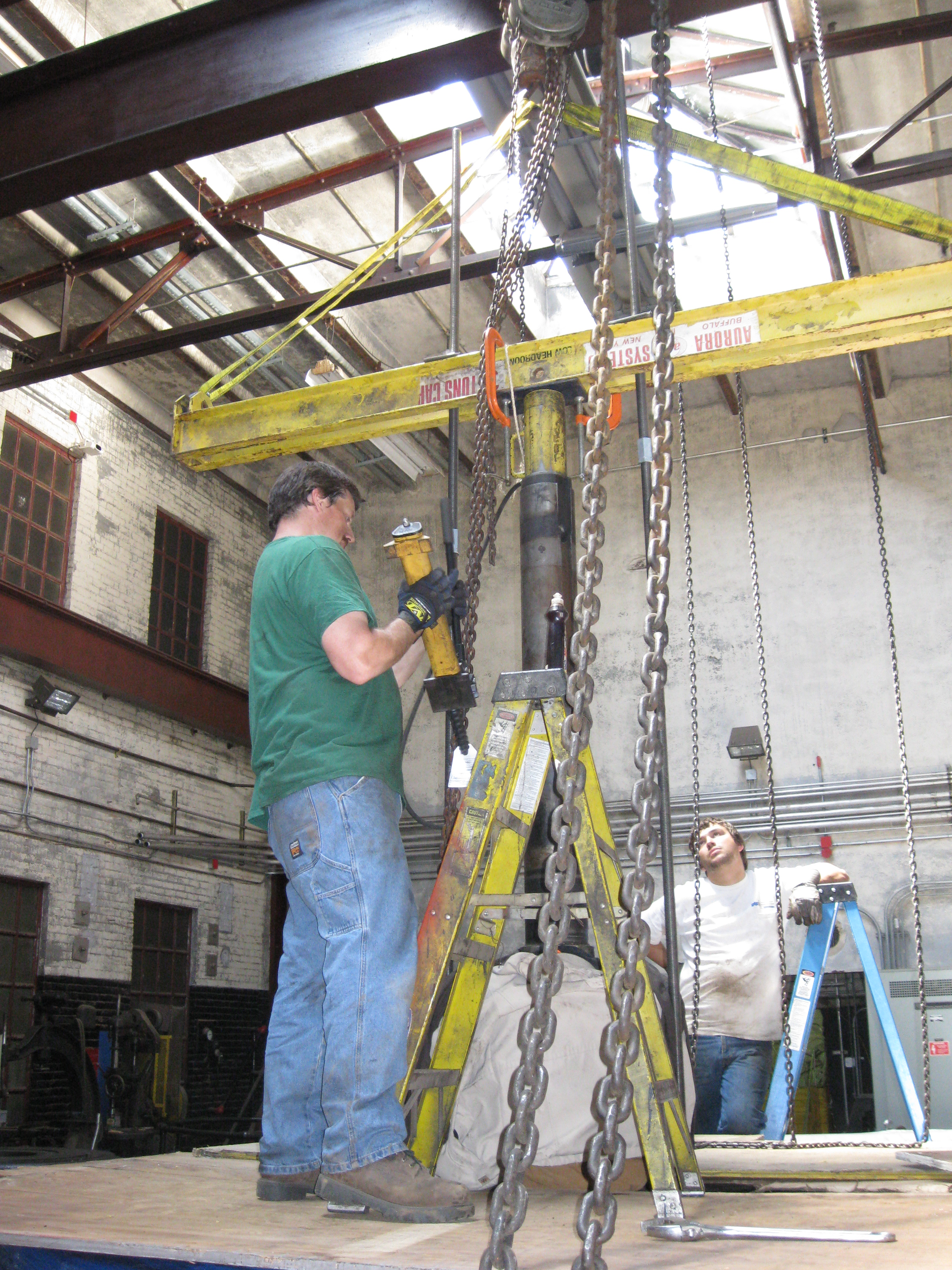
Here is the jacking set up. The upper strong back is a spreader bar that we picked up when we junked out the Millers Falls Paper Company. It was used for lifting the giant paper rolls in and out of the paper machines. There are two small, heavy, channel iron strong backs that span the spokes on the bottom. The threaded rods are 1 1/4 inch diameter. We jacked the cylinder up to 60,000 pounds and the shaft did not move. The next day we exchanged the 30 ton cylinder for a 150 ton cylinder and we jacked out the big shaft.
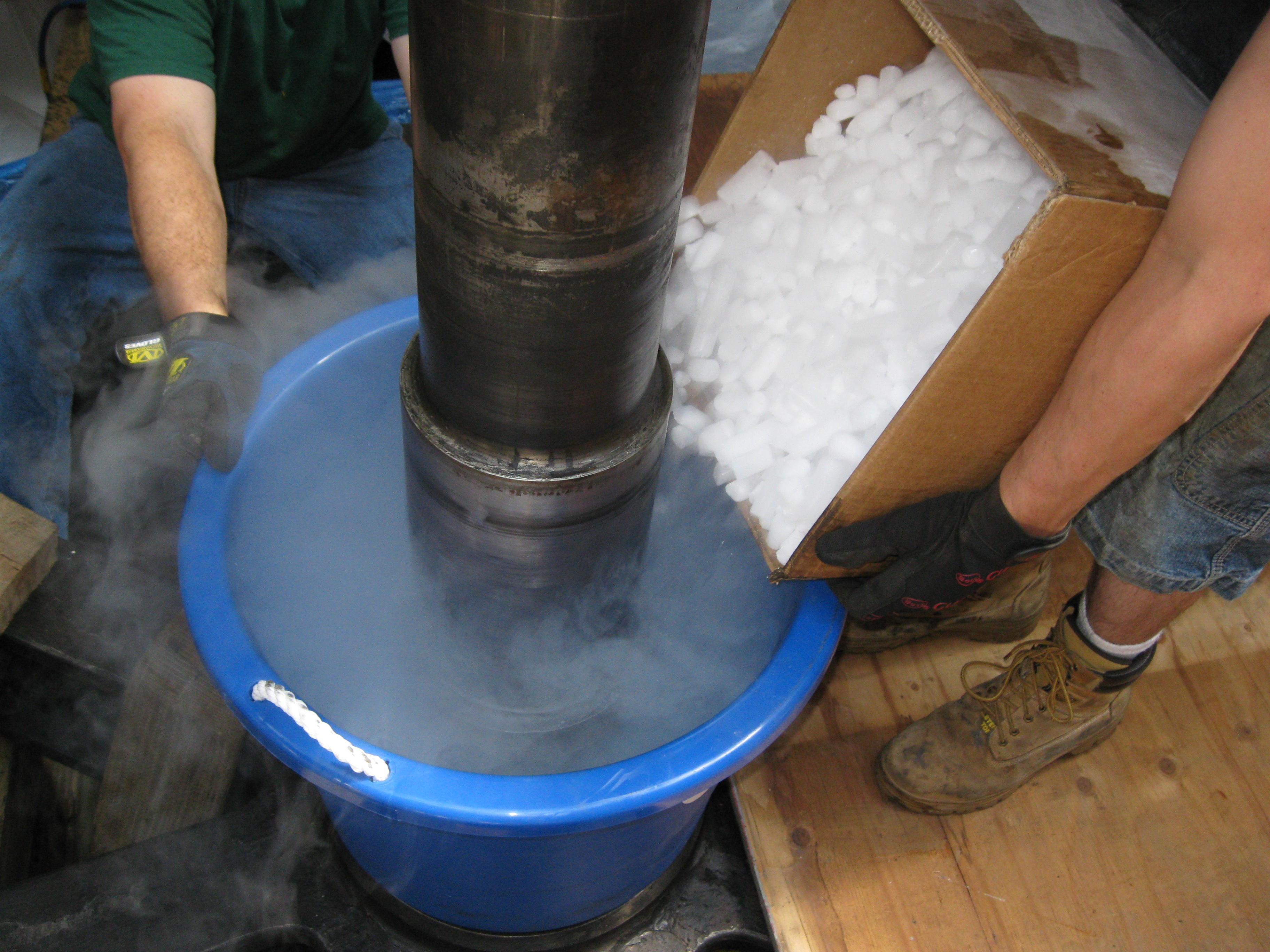
Here, we have purchased a trash can. We cut an 11 inch hole in its bottom and forced it over the top of the shaft. We are filling the can with dry ice (carbon dioxide). This allows the shaft to shrink in its bore and makes it easier to jack off. We covered the bucket with all my winter coats from the coat closet at 189 River Road. This was to insulate the intense cold from the ambient room temperature. After about three hours, we heated the hub with a monstrous, rose bud. Unfortunately, one rosebud was not enough heat and the 30 ton cylinder was too small. The next day we replaced the dry ice and the 30 ton cylinder with a 150 ton cylinder. We used two oxy-acetylene rose buds. It worked, we finally jacked out the big shaft.
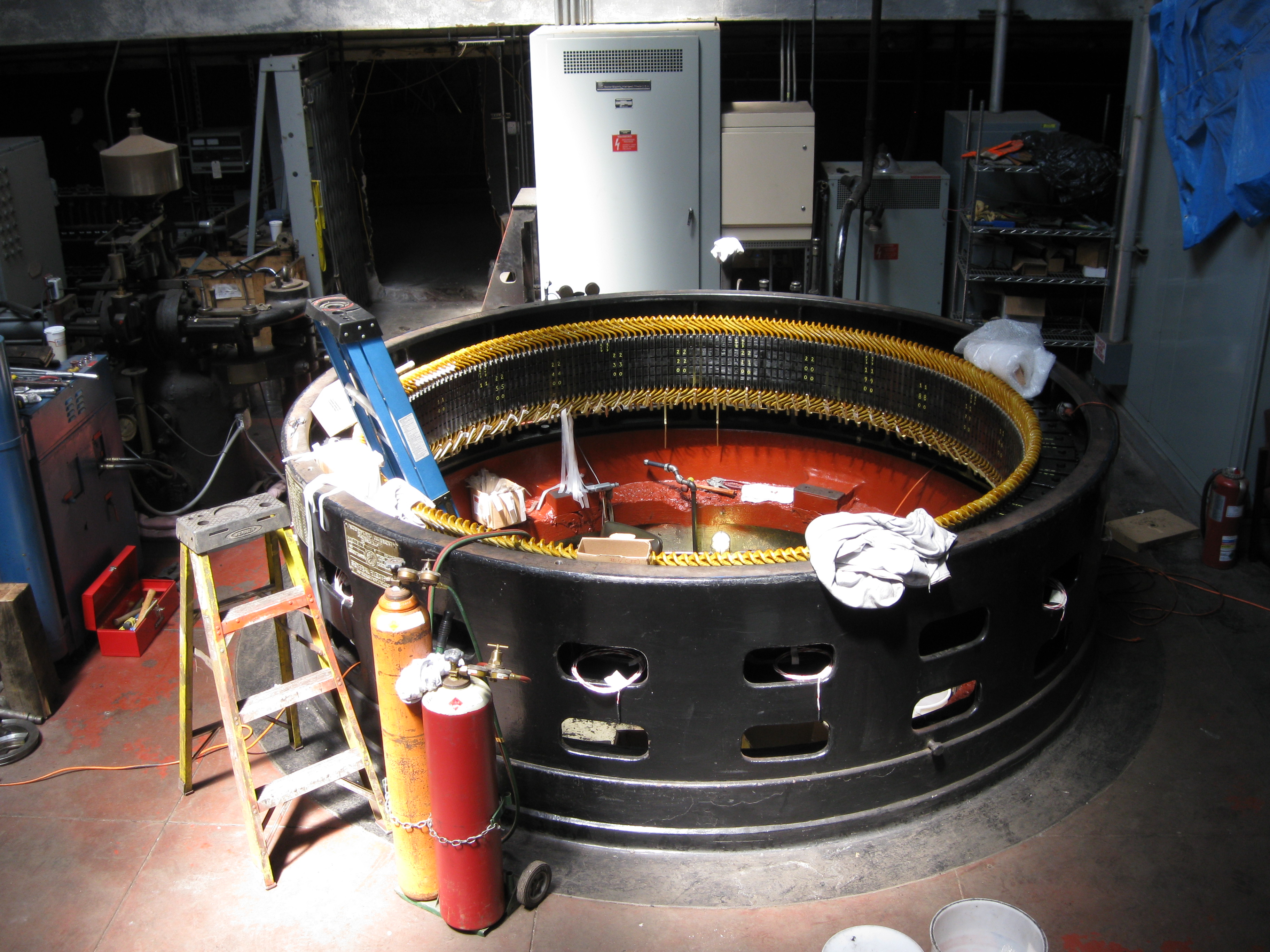
One of the Critical Care Teams, from Leppert-Nutmeg, are doing a beautiful job re-winding our generator. They have stripped, cleaned, painted and tested the stator iron core. They repaired the burnt spot in the iron and performed a core test. It was nicely within limits. Here they have installed the new stator coils and are hooking up the pig tails.
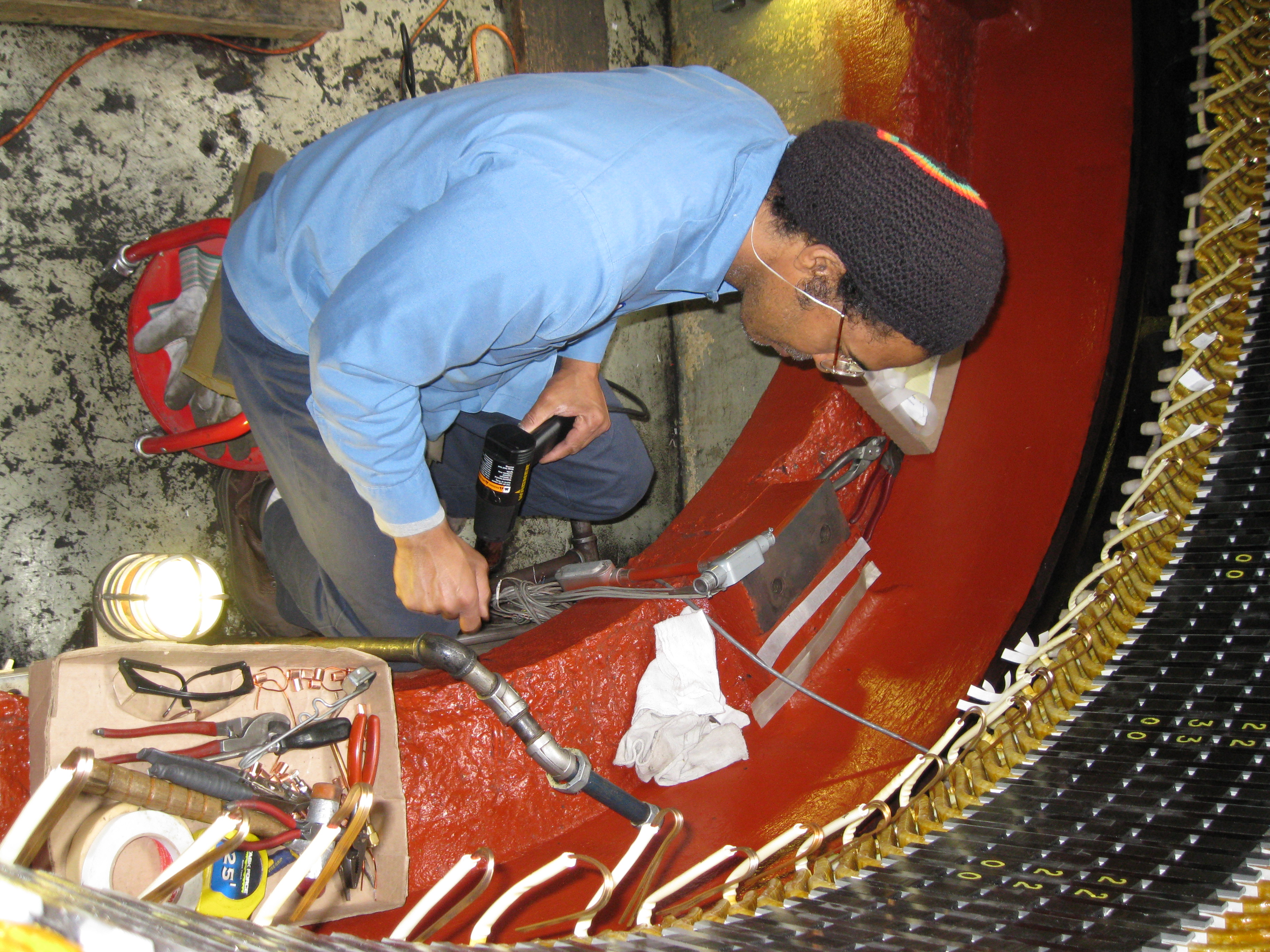
A close up of a highly skilled, generator, rewind Wizard, Tony Rochester, at work. Leppert-Nutmeg's, Critical Care Teams work with a professional intensity that are unparalleled in this day and age.
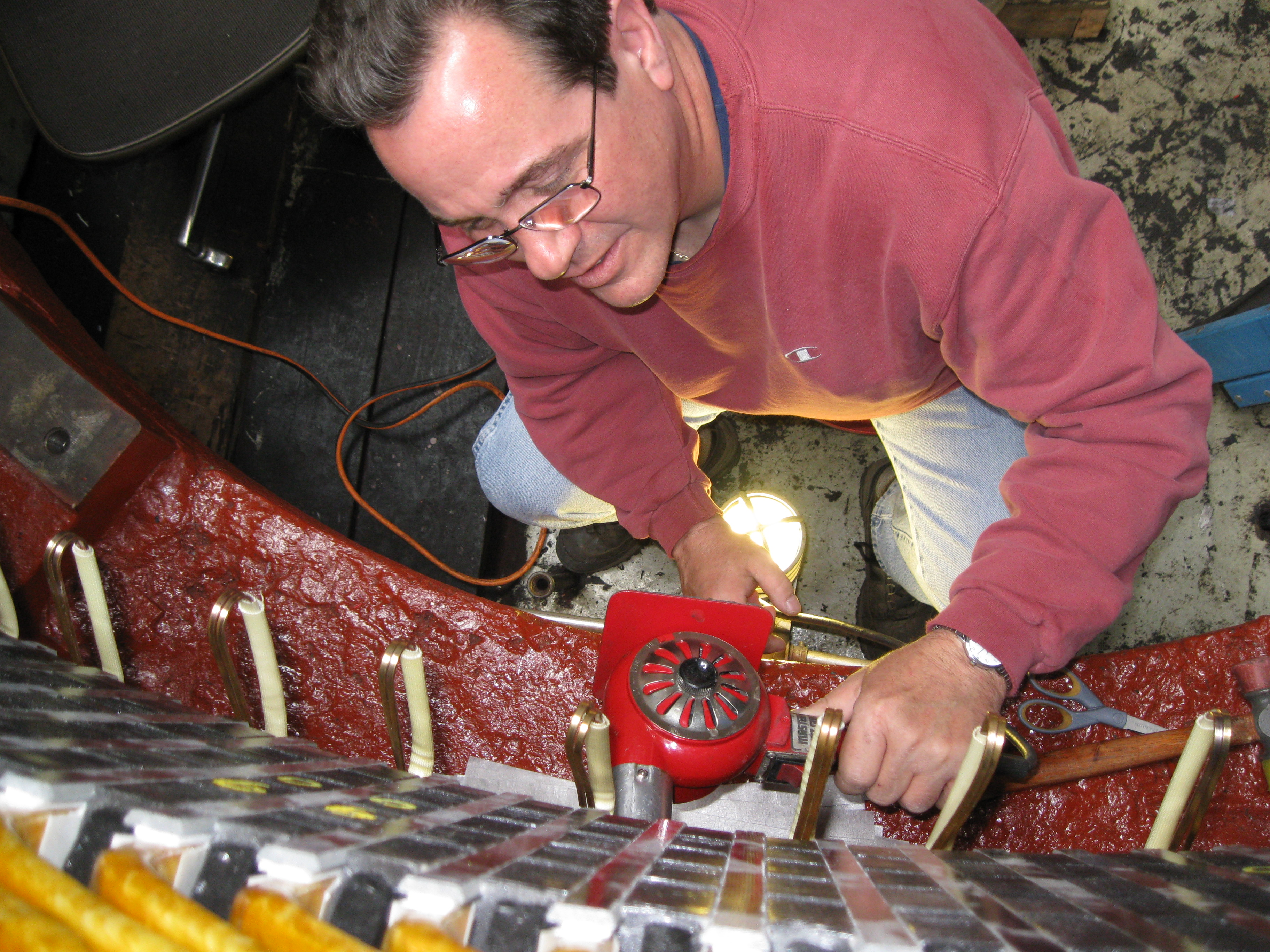
Another great view of suburb American craftsmanship!!! Mr. Mike Shaw, who is the Project Manager, of this Critical Care Team is drying the 5000 volt tape after having made another connection. If you need a generator rewound, please call Leppert-Nutmeg at 860-243-1737 and ask for Mr. Brian Scott.
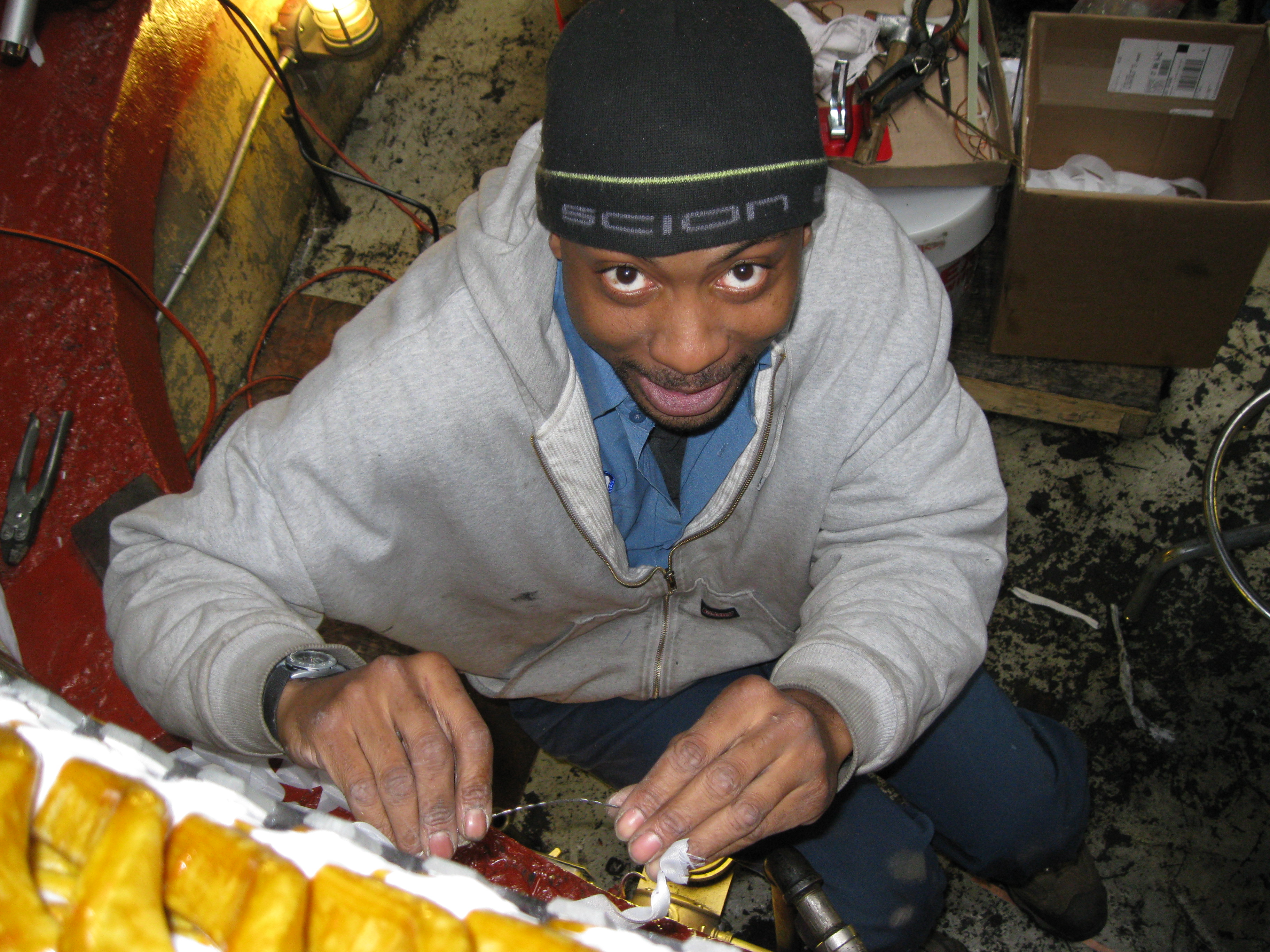
William Lee is carefully installing blocking with butterfly ties to prevent any coil movement. Watching William carefully and precisely manipulate wires, tape and varnish gives insight into why Leppert-Nutmeg is a leading generator re-winder on the East Coast. Their on-site, Critical Care Teams, are the preferred emergency repair response crews, utilized by the large utilities, to rewind their generators!!! It is amazing that you can call Brian Scott, at home, on a Saturday Night, with your generator emergency and he can summon a CCT to your site within hours!! These folks really care about their reputation and more importantly, about you!!!
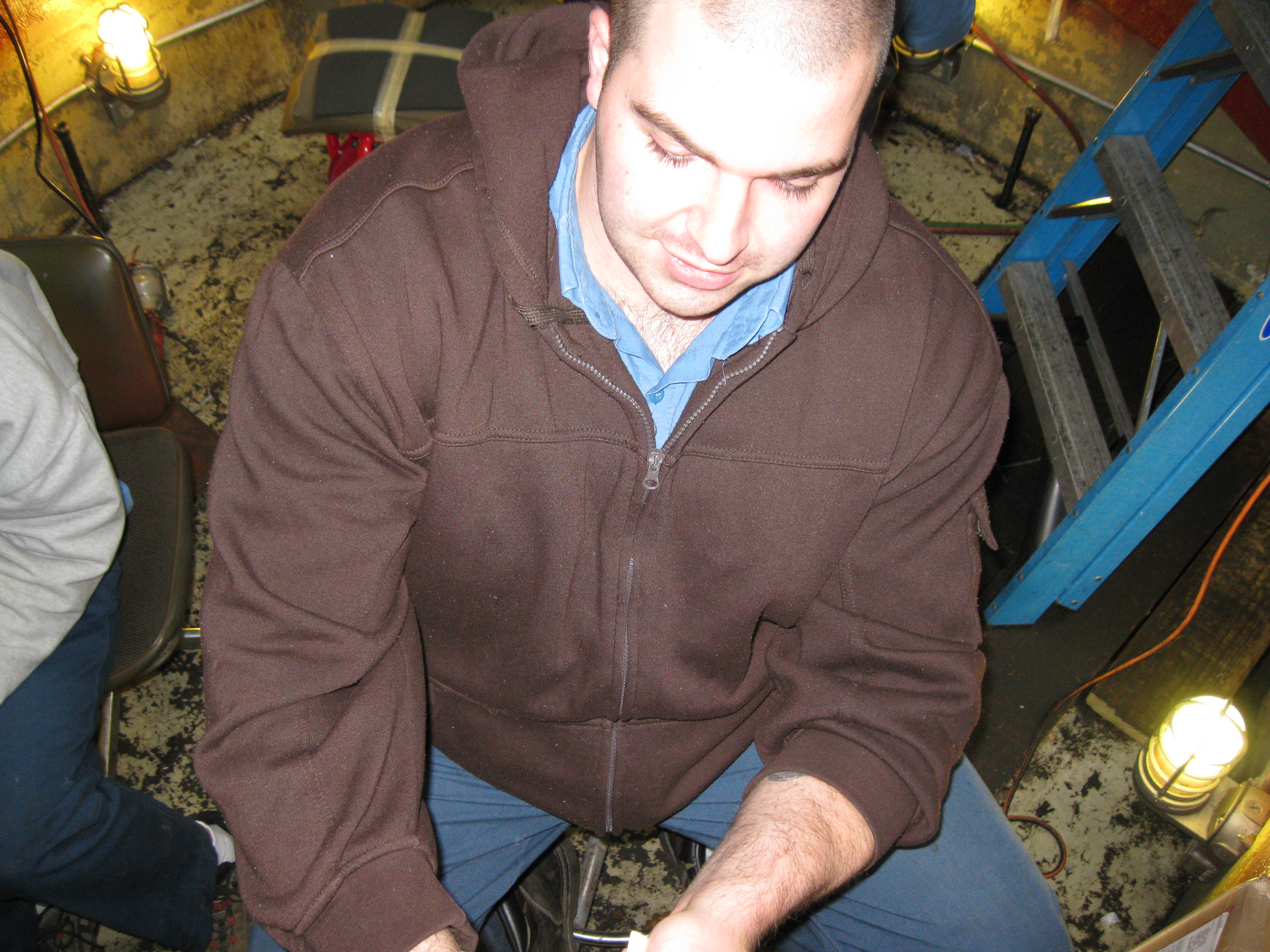
And last, but not least, of Leppert-Nutmeg's Fantastic Four, Josh Harger has been diligently taping the high voltage coil connections. This is tedious, time consuming and critical work. If one of these 240 connections is bad, there is a potential for a catastrophic and fatal electrical explosion! Lucky for us, Leppert-Nutmeg's safety record and success rate is 100%!!!!
We burned a 2300 hundred volt coil on our Turners Falls unit two weeks ago. Upon inspection we realized the windings were very brittle from aging. We needed to rewind the entire stator. In order to keep costs down, our crew dismantled the unit to allow the rewinders to work.
Note the very large eyebolt used to lift the rotor. It screws directly into the top of the rotor shaft. It was originally supplied by General Electric in 1918.
Our crew, under the supervision of Mike Desrouche, worked all last week pulling the unit. We have gotten back two quotations for the rewind work done in place. Not including our portion of the job, the costs are amazingly close to $145,000.