GREEN                       

     AND

        CLEAN

             POWER         

French River Land Company's Website!


French River Land Company's Home Page!


FRL History

Hydrolec Disassembly

Hydrolec Rebuild

Key Personnel

Machine Shop

News Page

Previous Pictures

Projects

For Sale

HYDROELECTRIC SITES:

Anasagunticook Lake Dam Replacement-    C.Fay & W.Fay

Appleton HEP-     Jim Lichoulas

Badger Pond Dam Removal

Senor Bonifettis' sites in Chile

Buttermilk Hydro

Chittendon Falls

Claytor Dam

Collins Bascule Dam

ESAC WORKS      July 1985

Fiske Mill

1852 Fourneyron

Golden Pond Hydro

Hunts Pond

Jaffery Fire Protection

Lake May Pelton Wheel Removal

Livermore Falls

Martinsville Hydro

OSV

Silk Knitters- Ron Macleod

South Village Dam

Shaker Mill Dam

Tannery Pond

Valatie Falls

Ware River Power's Hydrostations


USEFUL ENGINEERING:

The Banki Water Turbine Mockmoore and Merryfield

Bishops Method- STABGM Program

Blade Design-Nechleba

Chain Turbine by: Nguyen Minh Duy

Chain Turbine Mechanics- Discussions with Duy

Design of Small Water Turbines for Farm and Small Communities

Draft Tube Design

Draft Tube Tests

Ejection into Tailraces of Hydropower Plants: S. M. Slisskii

Fall Increaser- Henry Ford

Fall Increaser Herschel Venturi Tube

Fall Increaser Moody Ejector Turbine

Fall Increaser Hydraulic Jump Apron

Flashboard Pins

Gatecase Design- Kovalev

Gatecase Design- Nechleba

Hydraulic Turbines by Arnold Pfau

Hydrostatic Beam Analysis

Impulse Turbines  by Ely Hutchinson

Kaplan Blade Design NACA Air Foil- Report No. 460

Kaplan Blade Design NACA Air Foil- Report No. 628

Kaplan Design- Kovalev

A Laboratory Study to Improve the Efficiency of Crossflow Turbines- N. Aziz & V. Desai

Meggering Generators

Meggering      Earth Resistance

Out Gassing

Parallel Operation of Turbines Analysis

Pelton Design- Daugherty

Pelton Design- Nechleba

Powerhouse Design- Miniwatt Hydro

Powerhouse Design- Natick Dam

Power Plant Inspection

Rake-Leonard

Rake-Newport News

Rack Design-Chicopee-Olav Hotvedt

Rack Design- PHI- Bill Fay

Rack Design-PHI-Brian French

Rack Design-PHI-Ken Smith

Rack Design-ASCE

Rack Design- Hydraulic Institue of Munich

Rack Design-Flow Induced Vibrations

Selecting Hydraulic Reaction Turbines BUREC

Stress Analysis of Hydraulic Turbine Parts, BUREC- F.O. Ruud

Some Fluid Flow Characteristics of a Cross Flow Type Hydraulic Turbine- Durgin & Fay

Tests on a Kaplan Hydraulic Turbine

Theoretical Conditions Related to an Open Channel Flow Linear Turbine- Ishida & Service

Turgo, A High Speed Impulse Turbine- Paul Wilson

Vortices at Intakes

Water Hammer-Lorenzo Allievi-Text

Water Hammer-Lorenzo Allievi-Figures

Water Hammer-ASME Symposium 1933

Water Hammer _ Norman Gibson

Water Hammer-E.B.Strowger

Water Wheel Design- Ken Smith

Weights

Wooden Penstocks

TRADE CATALOUGES:

Bradway Turbine

Brook Waterwheel

Charmilles Turbines

Dayton Globe

Electric Machinery Company (EM)

English Pelton

ESAC

Essex Turbines

GE WW Vert Gen

GE Springbed Brg

Gilkes Turbines

GilkesWaterpower

Holyoke Hercules

Hunt Cat 29 A&B

Hunt cylinder

Kingsbury  Brg

Leffel Bulletin 38

Leffel Bulletin 54

Leffel Hoppes Unit

Leffel Laboratory Unit

Leffel Miscellaneous

Lombard Governor

Pelton Wheel (1909)

Pelton Wheel (1925)

Rodney Hunt

Samson PamK

Smith Power Tables

Smith Kaplan

Smith Power

Smith Pelton

Smith Develop

Smith Turbines: Bulletin 105

Swain Turbine

Tyler Turbine

Vertical Shaft Water Wheel Driven Generators- General Electric

Wellman Seaver Morgan

Westinghouse Small Vertical Waterwheel-Driven A-C Generators, July 1944

Westinghouse WW Generators

Woodward Governor


Links:

Swiftriverhydro.com

damengineers.com


Jaffery Fire Protection Web Page

Davis Hobbs and I purchased the General Electric, synchronous, salient pole, horizontal, 150 kilowatt, 164 rpm generator from the sub basement of the Jaffery Fire Protection Company in Jaffery, N.H. The problem was that it was located in a sub basement next to the foundations of a reciprocating steam engine. In order to remove it, we had to bring it up two stories through rock maple floors. Then it had to be rolled across an enclosed pedestrian bridge between the two sides of the mill over the river. Then it had to be taken out through one of the mill windows!! The doorways were to low to slide the stator through. In order to successfully rig out the generator, we had to dismantle it and take it in five separate pieces, the stator, the rotor, the two bearing pedestals and the bed.


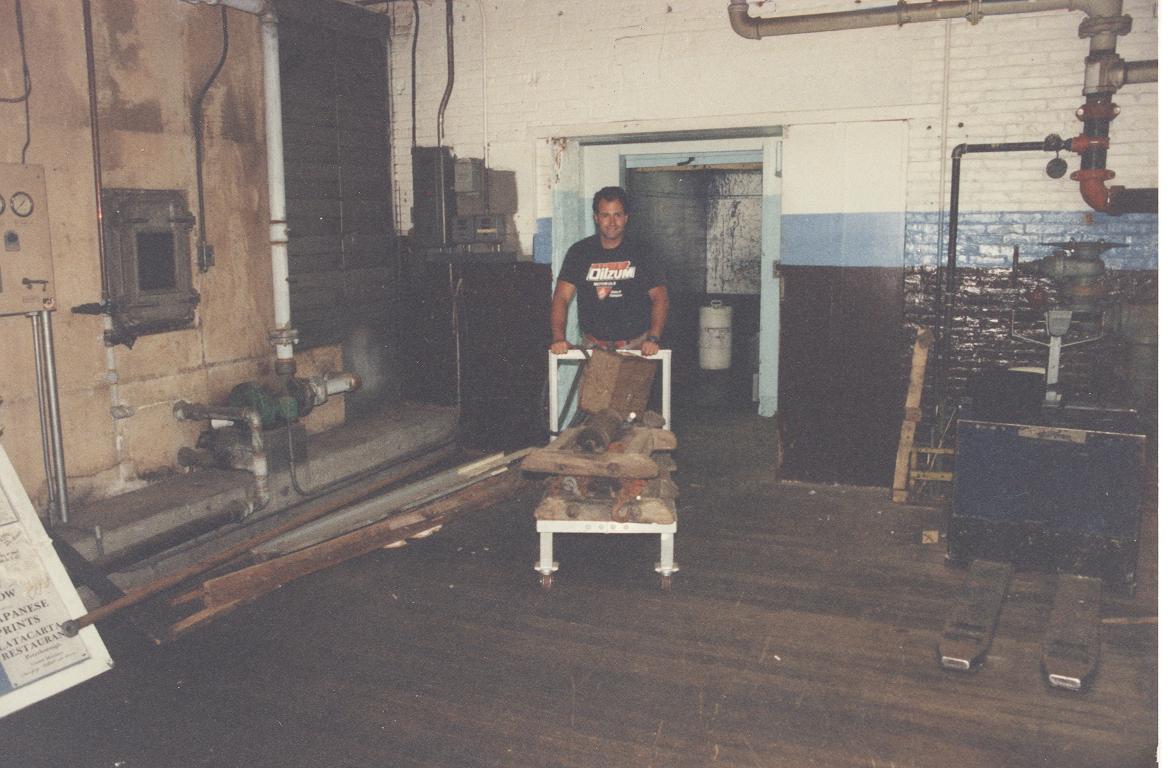
This was on day one and Davis is rolling in our tools and rigging.
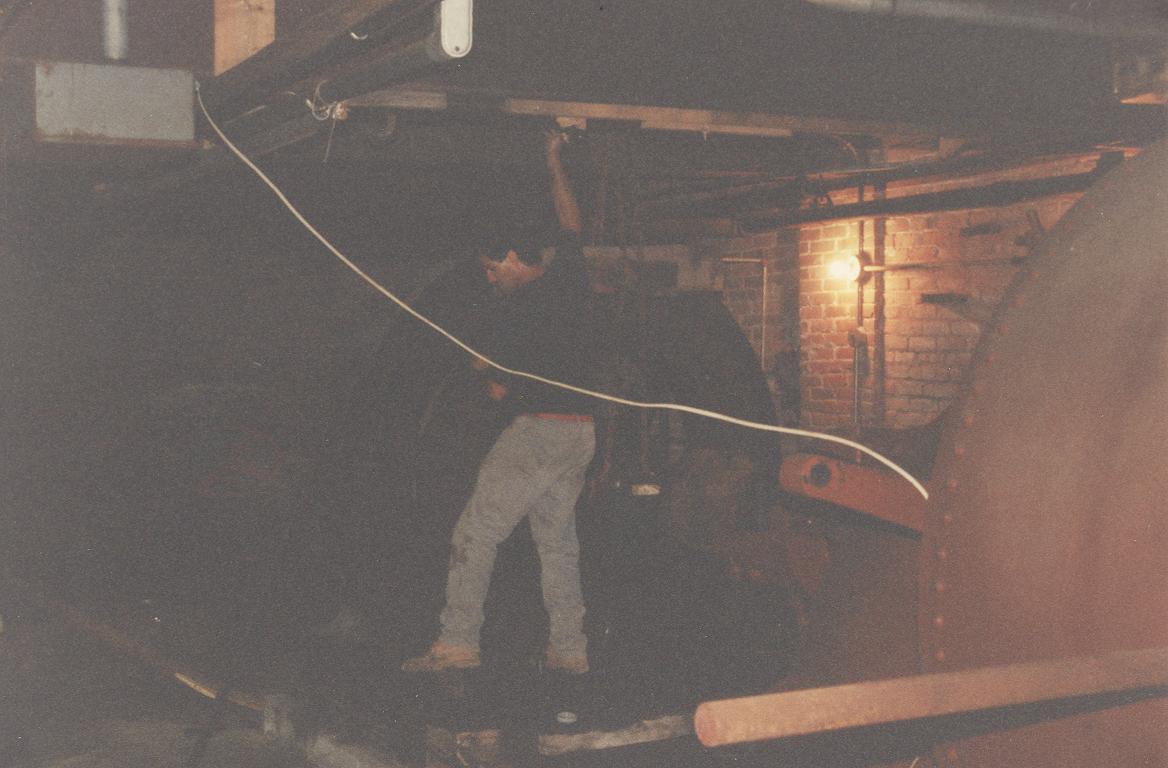
Here you can see the end of the Holyoke, Hercules, cylinder gate turbine that the generator was coupled to.
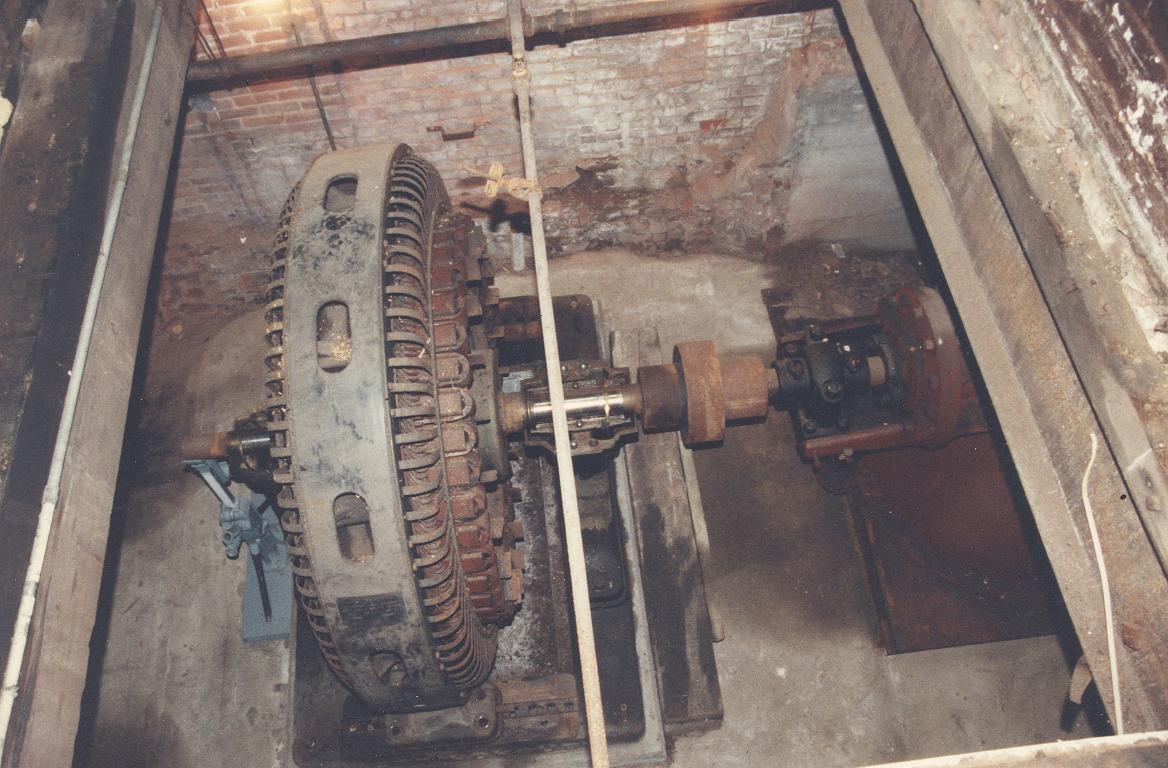
Here is a birds eye view of the generator in the hole we cut in the basement floor. The generator is still coupled to the turbine.
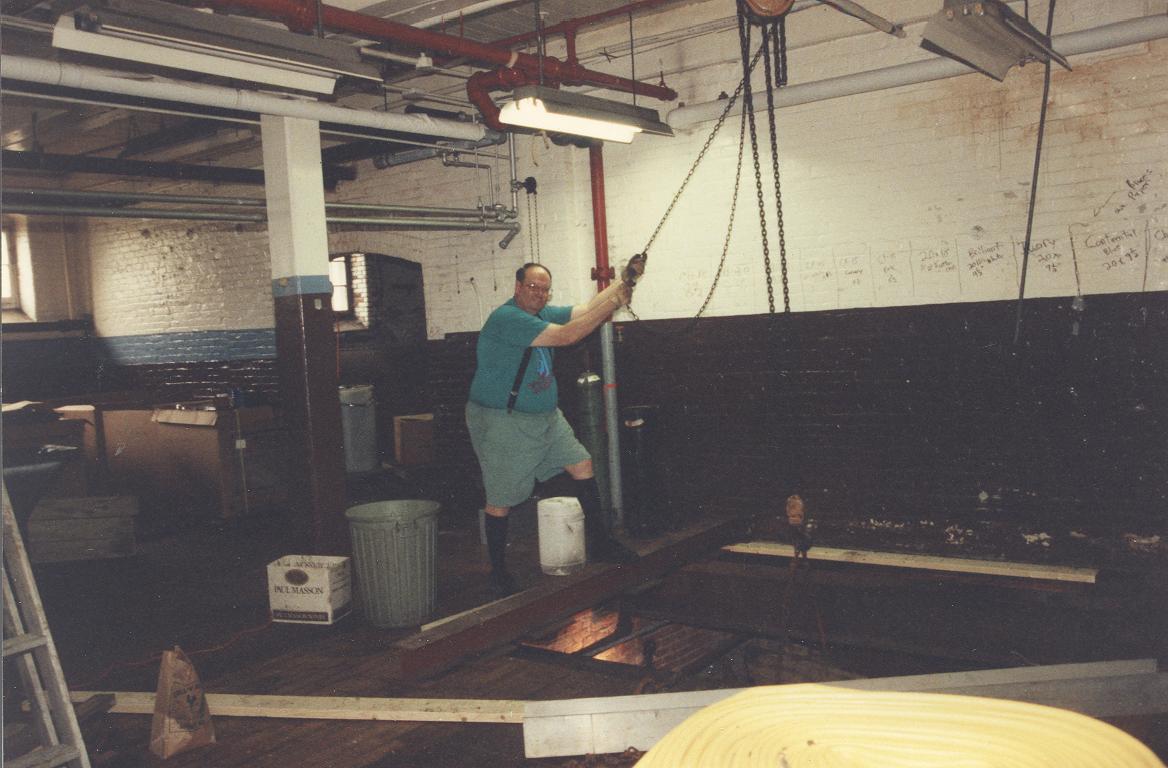
Russell McCord of Fort Wayne, Indiana is running the ten ton chainfall and pulling the rotor out of the cellar.
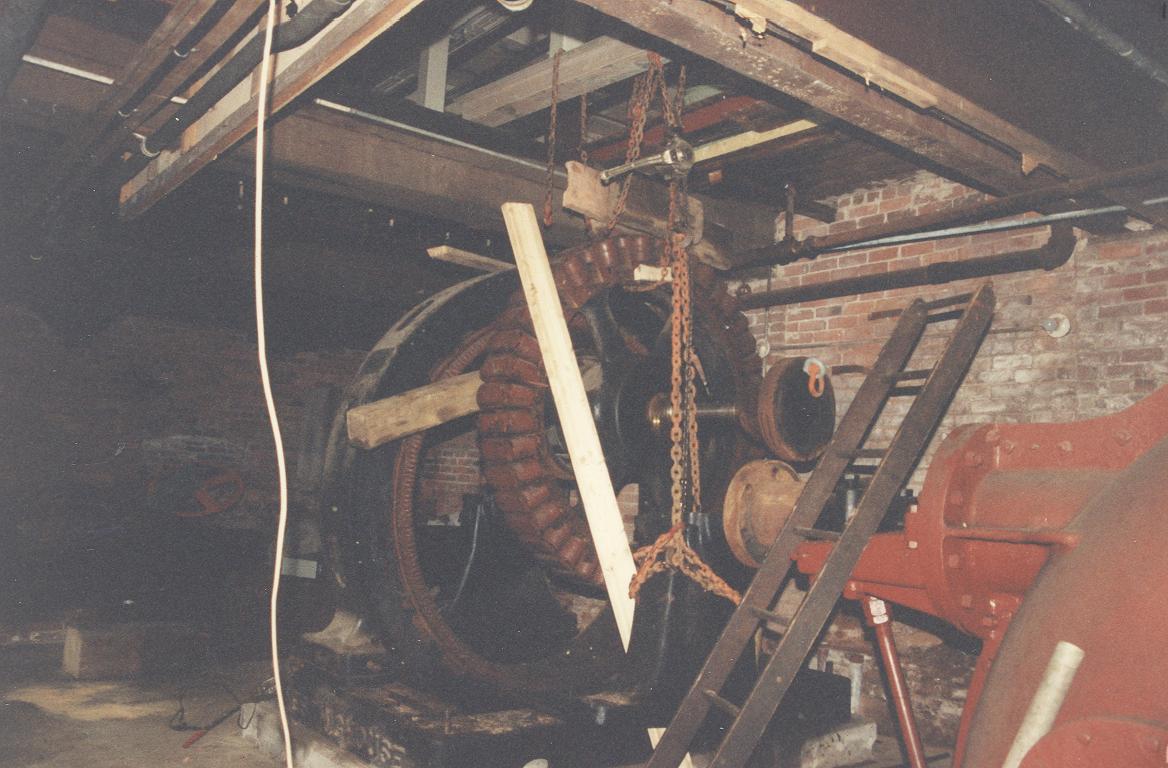
Here we have removed the bearing pedestals. We have rigged the rotor out of the stator and we are carefully lifting the rotor through the hatch we cut in the cellar floor.
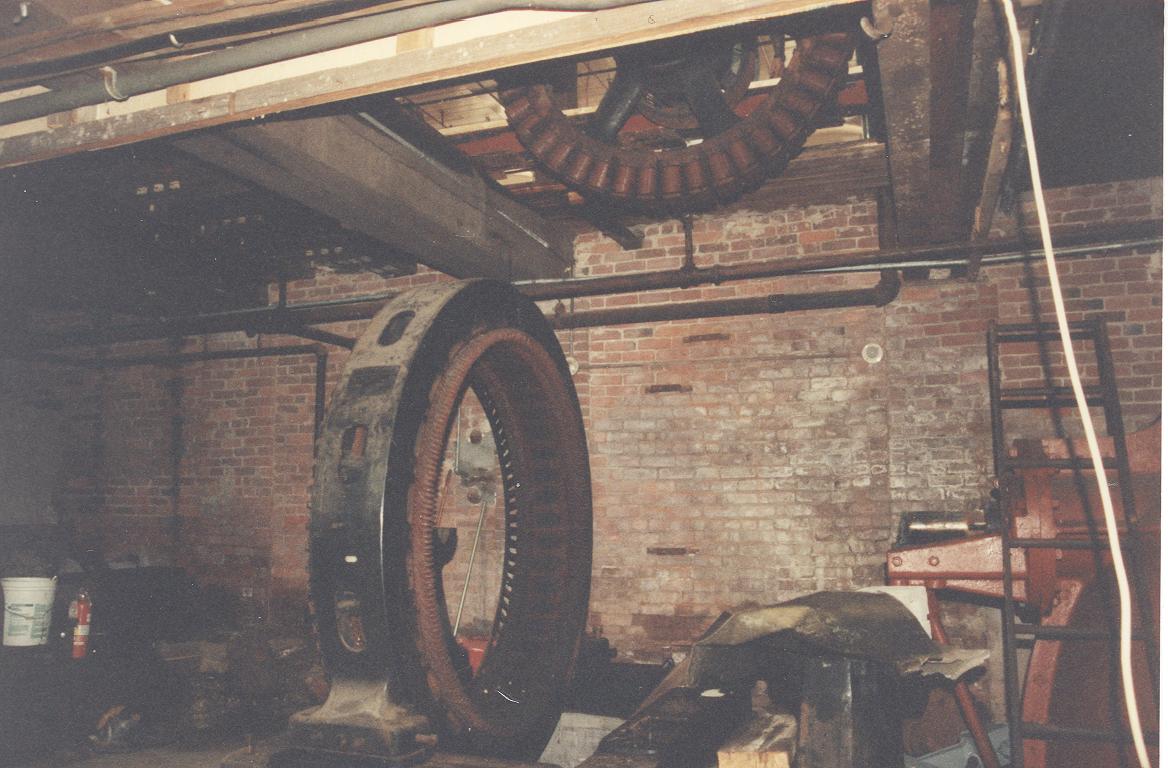
The rotor disappearing through the hole in the basement floor.
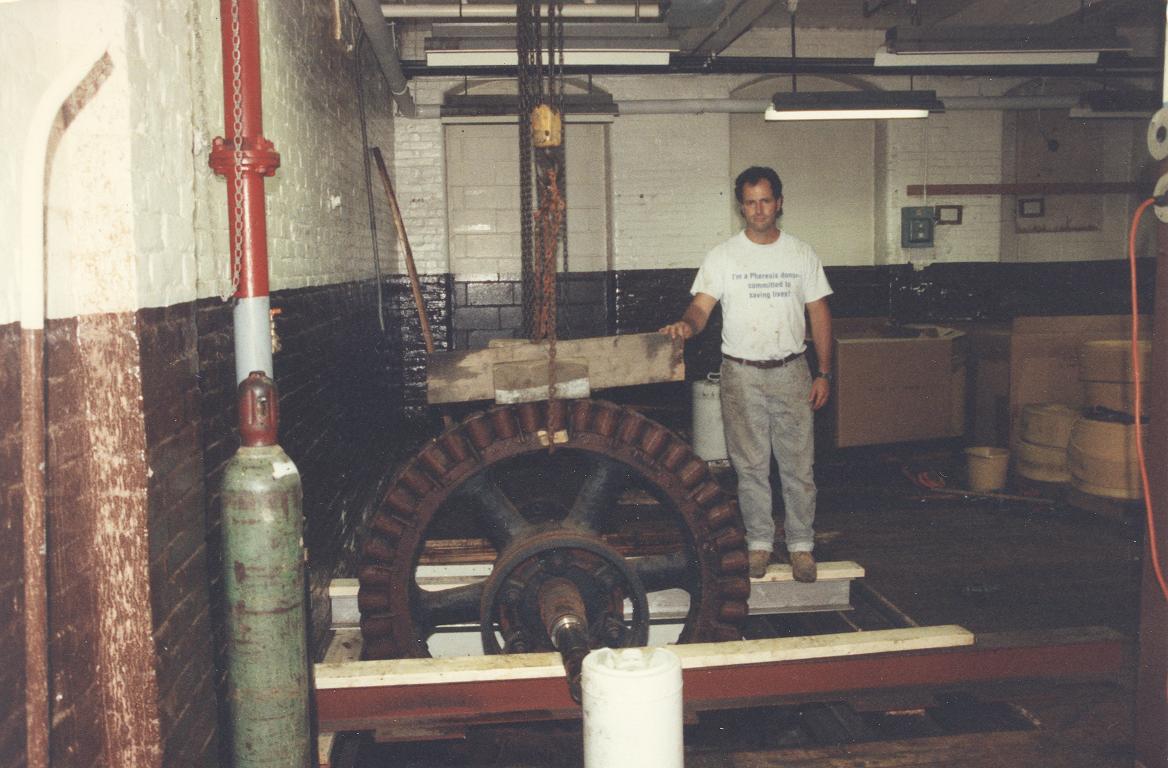
Here is the rotor coming through the second hatch we cut in the first floor. We have rested the rotor on small I-beams that we lined with 2x8s.
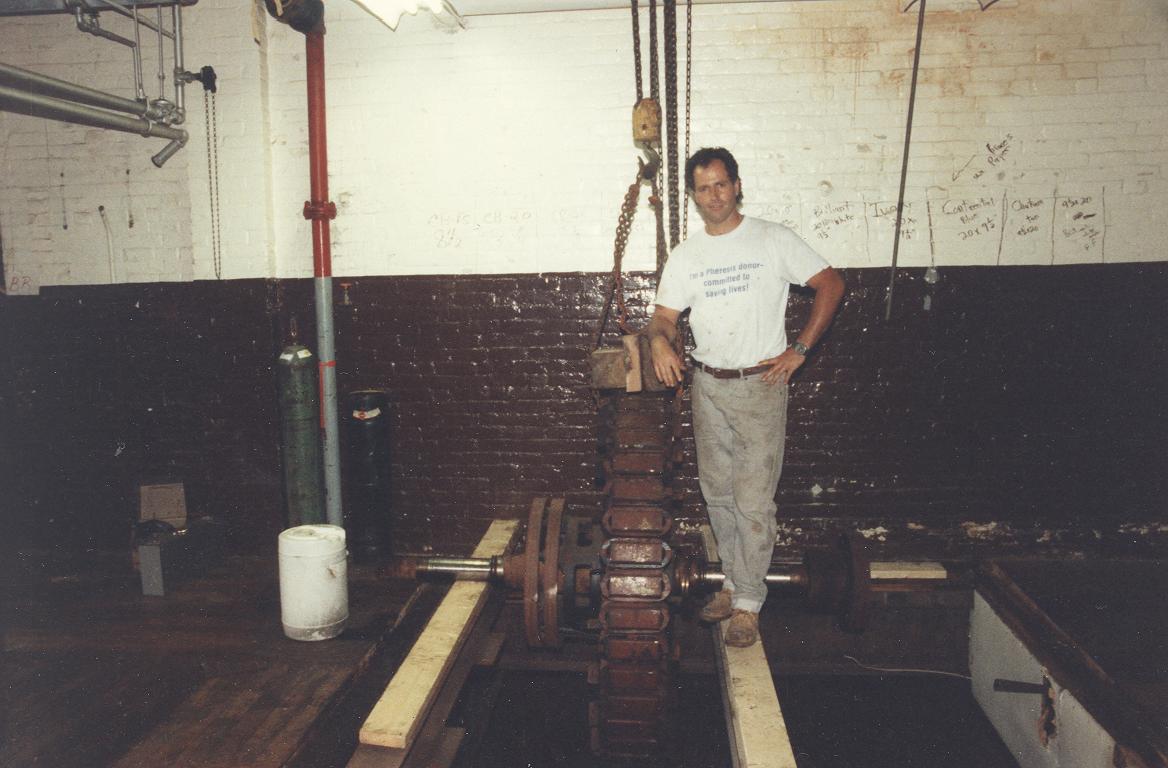
Another view of the rotor. Davis is getting ready to change out the rigging so that we can install cribbing beneath the shaft. We drilled a hole. with a 2 inch auger in the second story floor. We inserted an enourmous eyebolt up through the hole. We spanned the eye bolt with two short sections of I-beam. We slid a piece of heavy steel plate over the eyebolt and screwed the nut down. We then hung our chainfalls on a shackle that was through the eyebolt.
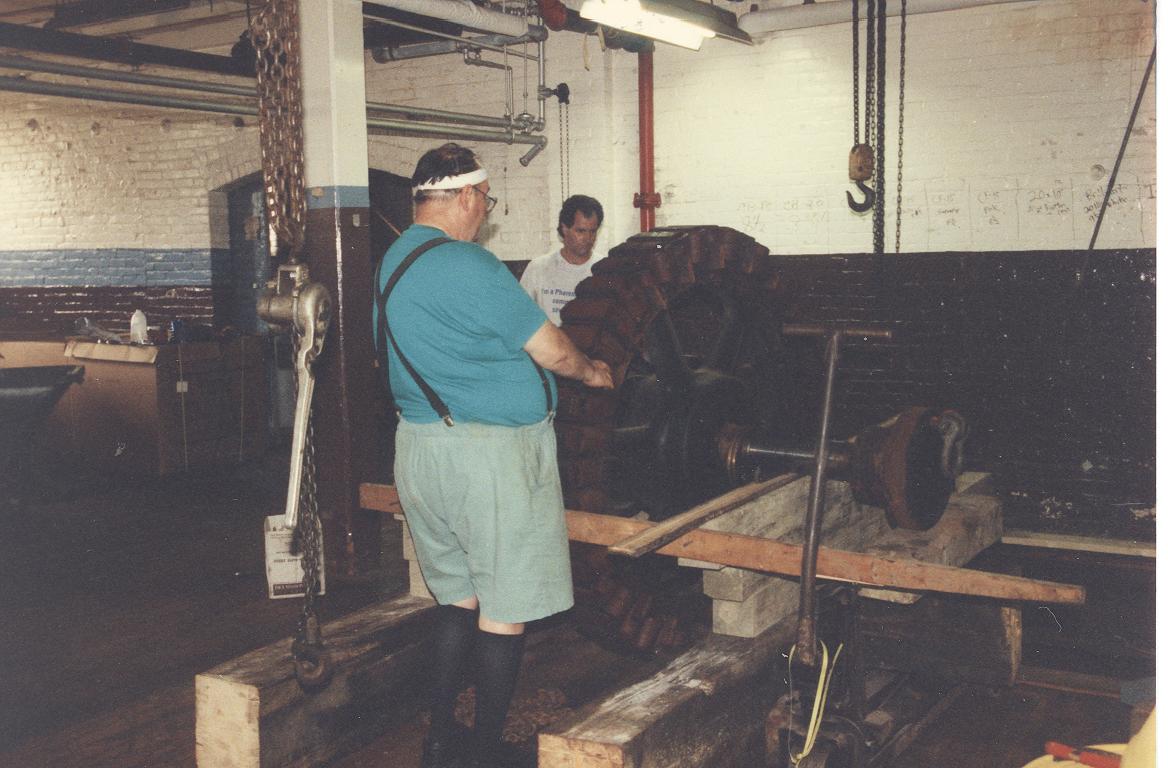
The rotor is on its cribbing. We placed caterpillar, machinery rollers beneath the cribbing and rolled the rotor out.
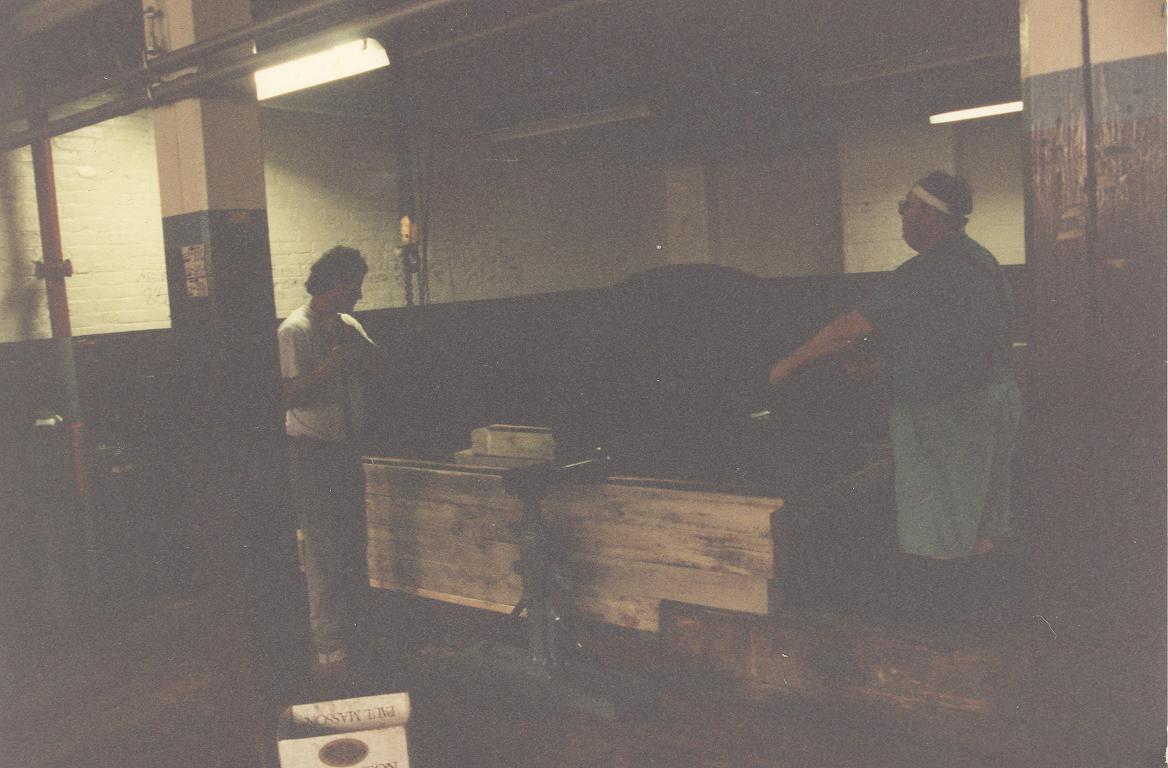
Another view of the cribbed up rotor.
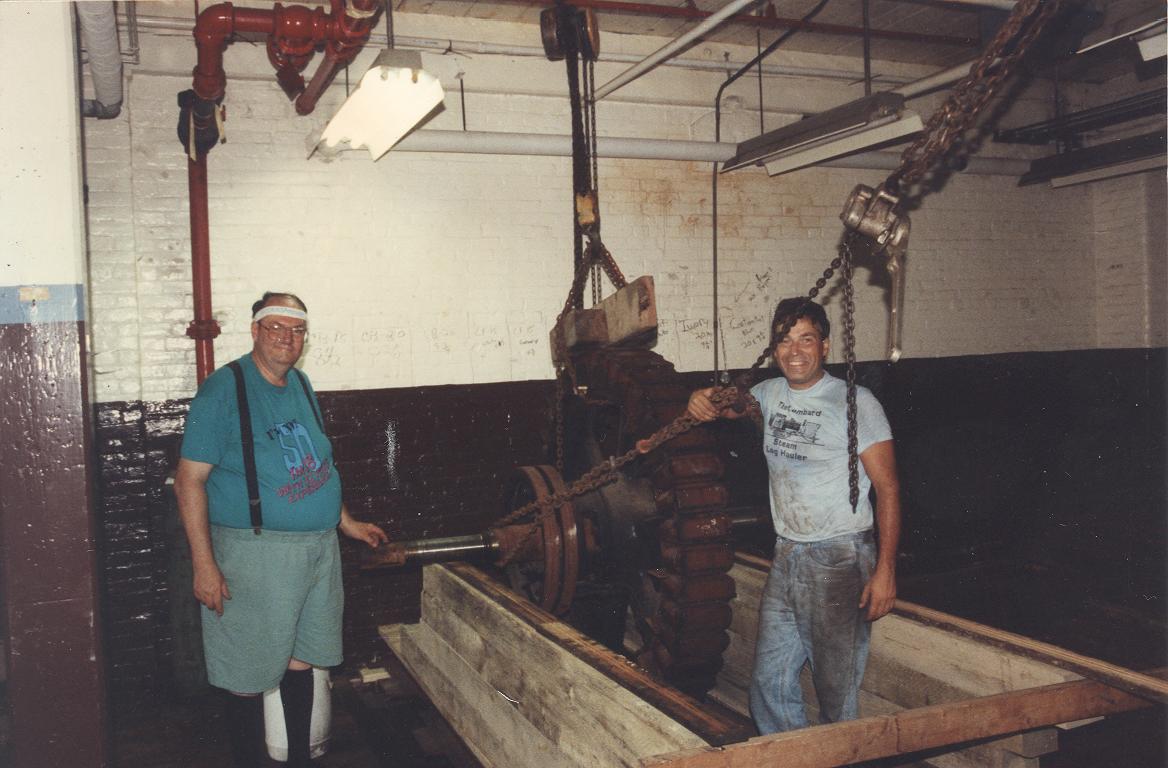
A rare picture of me with my Lombard Log Hauler tee shirt on!! I was always the guy taking the pictures. Russell McCord was a great help. He was on one of his New England tours.
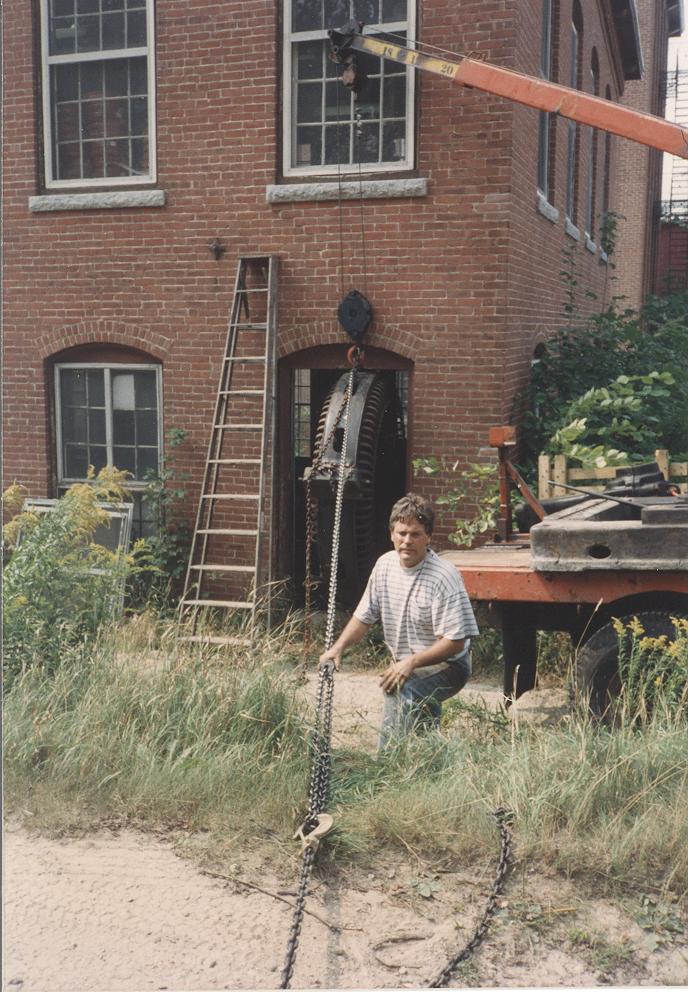
 

This is several weeks later and we have rigged the stator out of the sub basement. We moved it across the bridge. We are now taking the rotor out of one of the window openings. The stator is hanging on the crane boom. You can see the generator bed on the back of our cherry picker. All in a days work!!!! Several years later, we removed the turbine from the basement for a religious group in New York.

Send mail to: cfay@frenchriverland.com with questions or comments about this web site.
Last modified: 10/06/08